Canine parvovirus in puppies is a deadly, highly contagious virus that attacks the gut and bone marrow. Main signs are tiredness, no appetite, vomiting and bloody, foul-smelling diarrhea. There is no medicine that kills the virus. Vets treat it with IV fluids and supportive care. Early treatment and full vaccination give a puppy the best chance.
What Is Canine Parvovirus in Puppies?
Canine parvovirus (CPV) is a virus that spreads from dog to dog. It targets cells that divide fast. That means the lining of the gut and the bone marrow, where white blood cells are made. When these cells are damaged, a puppy cannot absorb food or water, and it cannot fight germs well.
Canine parvovirus in dogs of any age is possible. But the risk is highest in puppies. Per the Merck Veterinary Manual, young dogs aged 6 weeks to 6 months, who are unvaccinated or not fully vaccinated, are the most at risk. Some breeds, such as Rottweilers, Dobermans, German Shepherds and pit bull-type dogs, are listed as higher risk.
A large US study of nearly 79,000 dogs found that 46% of parvo cases were puppies aged 8 to 16 weeks. The same study found cases fell by more than 85% between 2010 and 2022. That drop shows vaccines work. But the disease has not gone away.
Signs of Canine Parvovirus in Puppies (Symptoms)
Parvo moves fast. Many puppies go from “a little quiet” to “very sick” in one or two days. Here are the canine parvovirus in puppies symptoms to watch for:
Early signs
- Tiredness and low energy
- Not eating, or refusing favourite food
- Fever
Signs that follow
- Repeated vomiting
- Watery diarrhea that turns bloody and smells very bad
- Belly pain
- Dehydration (dry gums, sunken eyes, loose skin)
Emergency signs — go to a vet at once
- Collapse or extreme weakness
- Very low body temperature
- Fast heartbeat or trouble breathing
- Not drinking at all
Note: Merck says most puppies start with tiredness and no appetite, then show vomiting and bloody diarrhea within 24 to 48 hours. About 1 in 4 dogs may have diarrhea without blood. So do not wait for blood to call the vet.
How Soon Do Signs Appear?
Signs usually show up 3 to 7 days after exposure (PetMD). Merck gives a wider range of 2 to 14 days. During this time, your puppy may look fine but can already be shedding the virus.
How Do Puppies Catch Parvo?
Puppies catch parvo by swallowing the virus. It comes out in the stool of infected dogs. It then spreads through:
- Sniffing or licking infected stool or soil
- Shared bowls, toys, beds and crates
- Paws and fur of other dogs
- Your shoes, hands and clothes
The virus is tough. Merck states it can live indoors for at least 2 months, and outdoors for many months or even years if shielded from sun and drying. Cornell’s vet college notes dogs can shed it before they look sick and for about two weeks after they recover.
In India, risk is higher where many dogs have partial vaccination, and stray dogs live near parks, lanes and building compounds. These areas can hold the virus in the soil. Keep your puppy off such ground until the vaccine course is complete.
Parvo vs Canine Distemper in Puppies
Pet parents often mix up parvo and canine distemper in puppies. Both are serious. Both can start with fever and tiredness. But they are different viruses and need a vet to tell them apart.
| Canine Parvovirus | Canine Distemper | |
|---|---|---|
| How it spreads | Swallowing virus from stool, soil, objects | Mostly by breathing in droplets from an infected dog |
| Main body parts hit | Gut and bone marrow | Eyes, nose, lungs, gut and nervous system |
| Typical signs | Vomiting, bloody foul diarrhea, no appetite, weakness | Fever, eye and nose discharge, cough, then gut or nerve signs |
| Special warning signs | Collapse, dehydration | Thick, hard paw pads and nose; twitching; seizures |
| Is there a cure? | No. Supportive care only | No. Supportive care only |
| Is there a vaccine? | Yes — a core vaccine | Yes — a core vaccine |
Good news: both are covered by core puppy vaccines. WSAVA lists canine distemper virus, canine adenovirus and canine parvovirus as the core vaccines for dogs all over the world. Many combination shots in India (often called DHPPi or DHPPiL) include them together. Ask your vet which one your puppy is getting.
Treatment for Canine Parvovirus in Puppies
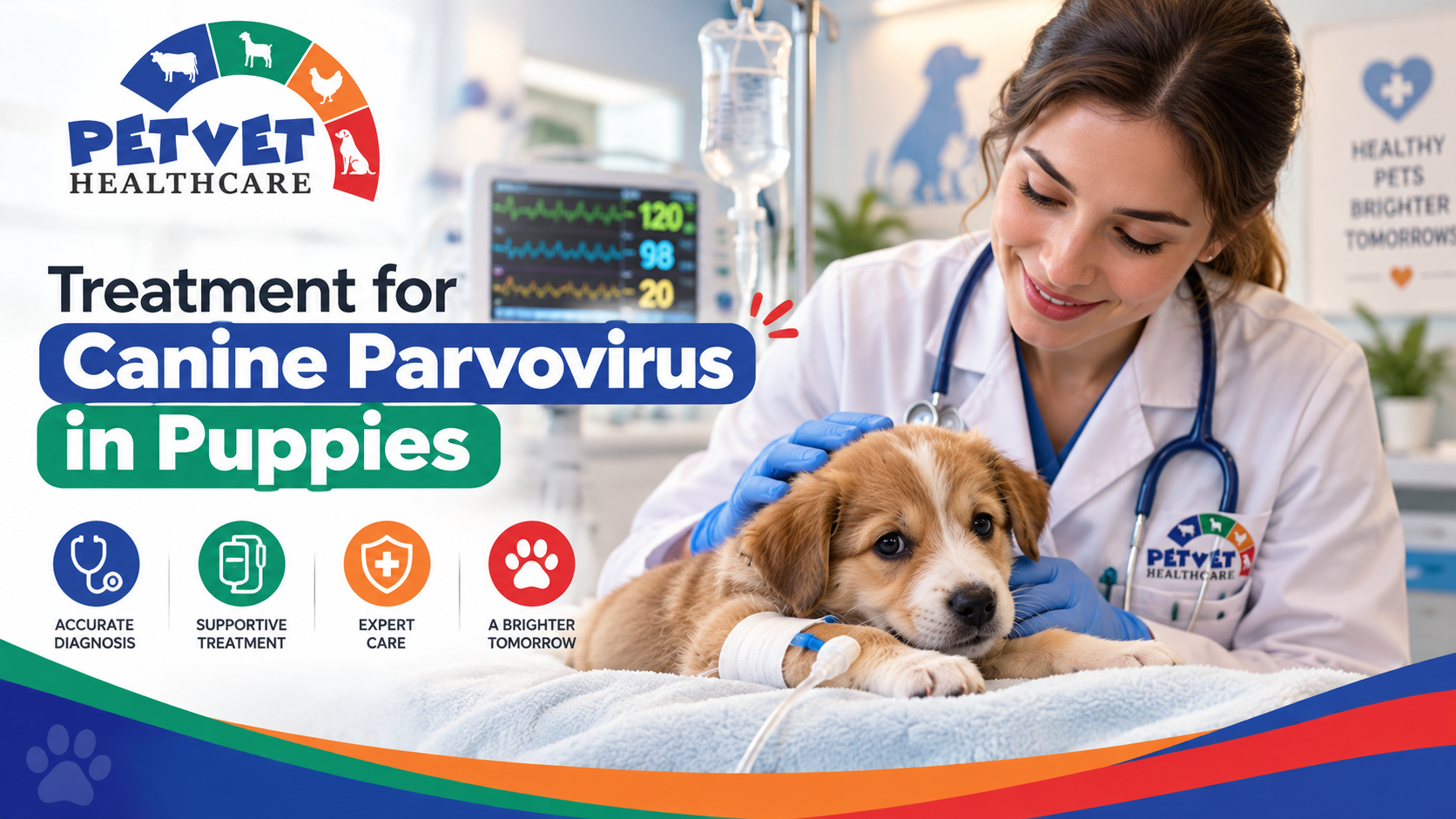
No drug kills the parvovirus itself. The aim of treatment is to keep the puppy alive and strong while its body fights the virus. A vet may do the following:
- IV fluids and electrolytes. This is the base of treatment (Cornell). It fixes dehydration and low salts.
- Anti-vomiting medicine. So the puppy can rest and keep food down.
- Nutrition support. Small, bland, easy-to-digest food. Some puppies need a feeding tube.
- Antibiotics. Not for the virus, but to stop gut bacteria from entering the blood in severe cases.
- Blood sugar and warmth care. Very young puppies can drop in sugar and body heat.
- Newer options. A one-time canine parvovirus monoclonal antibody injection is available in some clinics. Plasma transfusion may be used in very sick puppies. Ask your vet if these are suitable.
Why Home Treatment Is Risky
Please do not try to treat parvo alone with home remedies or human medicines. A puppy with vomiting and diarrhea loses fluid very fast. Without IV support, it can go into shock within a day or two. If you cannot reach a vet right away, keep the puppy warm and away from other dogs, and get to a clinic as soon as you can.
Can a Puppy Survive Canine Parvovirus?
Yes, many do — when treated early. Merck says 70–90% of dogs survive with proper supportive care, and over 90% survive when hospitalised. PetMD quotes 85–95% with prompt, aggressive care. The first 24 to 72 hours after signs start are the most dangerous.
One honest caution: a large JAVMA study of over 78,000 dogs seen at general vet hospitals found that 43.6% with known outcomes died or were euthanised within 14 days. Real-world numbers are lower than hospital numbers because many puppies arrive late or cannot get full care. Speed matters more than anything else.
How Long Does Recovery Take?
PetMD notes that recovering dogs are often sick for 5 to 10 days after signs start. Merck says dogs can keep shedding the virus for about 10 days after they look well. Keep a recovered puppy away from other dogs during this time and follow your vet’s feeding plan.
Can I Touch My Dog With Parvo?
Yes, you can touch a dog with parvo. Humans cannot catch canine parvovirus. Humans have their own parvovirus, which is a different virus. But your hands, shoes and clothes can carry the dog virus to other dogs. So:
- Wash hands with soap after every contact
- Change clothes before touching other dogs
- Keep shoes outside the sick puppy’s room
- Never visit a dog park, pet shop or groomer after handling a sick puppy
Prevention: How to Protect Your Puppy
1. Vaccinate on time and finish the full course
A single shot is not enough. Antibodies from the mother can block the vaccine in the first weeks, so puppies need a series of doses. A common schedule, per Merck, is at 6–8, 10–12 and 14–16 weeks, with a booster at 1 year and then every 3 years. WSAVA says the last puppy dose should be given at 16 weeks of age or older. Your vet may adjust this for your area and your puppy’s health.
2. Limit exposure until the course is done
- Avoid parks, lanes, pet stores, grooming salons and dog meet-ups
- Do not let your puppy sniff stray dogs’ stool
- Let your puppy play only with healthy, fully vaccinated dogs
3. Disinfect the right way
Many cleaners do not kill parvo. Merck and Cornell both advise diluted bleach (1 part bleach to 30 parts water), left on the surface for at least 10 minutes. Clean the stool first, since bleach works poorly on dirt. Do not use bleach on the puppy, and keep the puppy away while cleaning. Wash bowls, bedding and crates well.
4. Keep hygiene strict at home
- Wipe paws and wash hands when you come in
- Pick up stool right away
- Quarantine any new or sick dog from your puppy
At What Age Is a Dog Safe From Parvo?
No dog is 100% safe at any age, but risk drops a lot after the full puppy course. Puppies are most at risk from 6 weeks to 6 months. A puppy is best protected only after finishing all doses, with the last at 16 weeks or older, plus the booster your vet advises. Unvaccinated adult dogs can still catch parvo.
How Vets Diagnose Parvo
Vets use a quick stool test (fecal ELISA, often called a parvo SNAP test) that gives a result in about 10 minutes. PetMD warns that a negative test does not always rule out parvo if the puppy is not shedding at that moment. Blood tests help check white blood cells and sugar. Your vet will decide the next step.
How PetVet Healthcare Supports Veterinary Care
(For veterinarians, clinics and animal-health distributors)
Fighting parvo takes a team: the pet parent, the vet, and reliable medicines. PetVet Healthcare is a veterinary medicine manufacturer in Ambala Cantt, Haryana, working since 2019. [CONFIRM before publishing: WHO-GMP certification claim and “since 2019” from the website.] Our range includes injections, boluses and feed supplements such as electrolytes, liver tonics and multivitamins.
Important: none of our products is a cure for parvovirus, and no supplement replaces IV therapy and a vet’s care. Any product should be used only on a registered veterinarian’s advice.
If you are a vet or business owner, you can explore:
- Veterinary product list
- Veterinary PCD pharma franchise
- Third-party veterinary medicine manufacturing
- Contact PetVet Healthcare — +91 86074 15111 | petvetindia@gmail.com
- More guides on our blog
Frequently Asked Questions
Can a puppy survive canine parvovirus?
Yes. With early vet care, most puppies survive. Merck reports 70–90% survival with supportive care and over 90% in hospital. The first 24 to 72 hours after signs begin are the riskiest. Late treatment, very young age and low white blood cells lower the odds. Call a vet at the first sign.
What are the first signs of parvo in a puppy?
The first signs are tiredness, loss of appetite and sometimes fever. Vomiting and diarrhea usually follow within a day or two, and the diarrhea may turn bloody and foul-smelling. If your puppy is unvaccinated or only partly vaccinated and acts “off,” do not wait. Call your vet the same day.
Can I touch my dog with parvo?
Yes. Humans cannot get canine parvovirus, so it is safe to comfort your dog. But the virus can stick to your hands, shoes and clothes and spread to other dogs. Wash your hands well, change clothes, and keep other dogs away from the sick puppy and anything it touched.
At what age is a dog safe from parvo?
No age is fully safe. Puppies aged 6 weeks to 6 months face the highest risk. A dog is best protected after finishing the full puppy vaccine series, with the last dose at 16 weeks or older, plus the booster your vet advises. Unvaccinated adult dogs can still get parvo.
Is parvo the same as canine distemper in puppies?
No. They are different viruses. Parvo mainly hits the gut and bone marrow and causes vomiting and bloody diarrhea. Distemper mostly spreads by droplets and affects the eyes, nose, lungs and nerves. Both are serious, and both are covered by core puppy vaccines. Only a vet can confirm which one your puppy has.
How is parvo in puppies diagnosed?
Vets use a fecal test that gives a result in about 10 minutes, and often add blood tests. A negative result can still be wrong if the puppy is not shedding virus at that moment. Your vet will look at the signs, history and vaccine record together before deciding on treatment.
Key Takeaways
- Parvo is an emergency. Call a vet at the first sign.
- There is no cure for the virus. Treatment is supportive care, mainly IV fluids.
- Humans can’t catch it, but can carry it on shoes, hands and clothes.
- Finish the full vaccine course — last puppy dose at 16 weeks or older.
- Disinfect with 1:30 diluted bleach; the virus lives for months.
Sources
- PetMD — Parvo in Dogs and Puppies (reviewed by Michael Kearley, DVM; updated Jan 2025)
- Merck Veterinary Manual — Canine Parvovirus (professional version)
- Merck Veterinary Manual — Canine Distemper (Hardpad Disease), pet owner version
- Cornell University College of Veterinary Medicine — Canine Parvovirus (Dr. Aly Cohen)
- WSAVA 2024 Guidelines for the Vaccination of Dogs and Cats
- dvm360 — Parvovirus cases fell sharply over 13 years; mortality risk remains high (summary of JAVMA study, 2010–2023)
- VOSD — Parvovirus in Dogs (India context)