

What Is Milk Fever in Cows?
Milk fever, also called parturient hypocalcemia, is a metabolic disorder in dairy cows caused by a sudden drop in blood calcium levels around the time of calving. Despite the name, it does not involve any actual fever — the condition gets its name from the mild body-temperature changes and weakness seen in affected animals. It typically strikes high-yielding dairy cows within 24 to 72 hours of calving, when calcium demand for colostrum and milk production outpaces the body’s ability to mobilize calcium from bone and diet.
1. What Is Milk Fever?
Milk fever (parturient paresis) is one of the most common metabolic disorders affecting dairy cattle worldwide. It occurs when a cow’s blood calcium concentration falls below the level needed for normal muscle and nerve function, generally under 8 mg/dL, with severe clinical cases dropping below 5 mg/dL. Calcium is essential for muscle contraction, so when levels crash, the cow’s own muscles — including the heart, gut, and limbs — begin to lose function.
The condition is most common in older, high-producing dairy cows, particularly from the third lactation onward, because the sudden onset of milk production at calving creates an enormous calcium demand that the body struggles to meet quickly enough.
2. Milk Fever in Cows: Causes
Understanding milk fever in cows’ causes is the first step toward effective prevention. The primary contributing factors include:
- Sudden calcium demand at calving – Colostrum alone can contain 10 times more calcium than normal blood levels require, pulling large amounts of calcium out of circulation within hours of calving.
- Slow calcium mobilization – Older cows are less efficient at pulling calcium from bone reserves or absorbing it from the gut compared to first-lactation heifers, which is why milk fever is rare in young cows.
- High-calcium pre-calving diets – Feeding excess calcium during the dry period can suppress the hormonal mechanisms that would otherwise help the cow mobilize her own calcium reserves after calving.
- Breed predisposition – Jersey cows are more genetically susceptible to milk fever than Holstein-Friesian cows, though both breeds are affected.
- High milk yield – Cows with higher genetic potential for milk production face steeper calcium demand curves and are statistically more likely to develop the condition.
- Poor dietary cation-anion balance (DCAD) – An imbalanced ratio of dietary cations to anions before calving disrupts normal calcium regulation.
- Advancing parity – The risk of milk fever increases with each successive lactation.
3. Milk Fever Symptoms
Recognizing milk fever symptoms early can be the difference between a full recovery and a fatal outcome. Veterinarians typically classify the condition into three progressive stages:
Stage 1 (Early/Standing): Restlessness, mild muscle tremors, reduced appetite, staring eyes, and slight incoordination. The cow is still standing but appears uneasy.
Stage 2 (Sternal Recumbency): The cow can no longer stand and lies on her chest with an S-shaped kink in her neck, cold ears and limbs, dry muzzle, dilated pupils, and slowed heart rate. Rumen movement stops, leading to bloat.
Stage 3 (Lateral Recumbency/Coma): The cow lies flat on her side, becomes unresponsive, loses consciousness, and without emergency treatment can die within hours due to heart failure or severe bloat.
Early intervention at Stage 1 dramatically improves outcomes, which is why farmers are advised to monitor fresh cows closely during the first 72 hours after calving.
4. How to Treat Milk Fever
Once clinical milk fever is confirmed, treatment must be prompt:
- Intravenous calcium infusion – A veterinarian typically administers 400–500 mL of 23% calcium borogluconate solution slowly via IV, monitoring the cow’s heart rate throughout to avoid cardiac complications from overly rapid infusion.
- Follow-up oral calcium bolus – After the IV infusion stabilizes the cow, oral calcium boluses are given to sustain blood calcium levels over the following 12–24 hours, since IV calcium alone provides only short-term correction.
- Subcutaneous calcium – In milder cases or as a supplement to IV treatment, calcium can be given under the skin for slower, sustained absorption.
- Supportive care – Keeping the cow warm, turning her regularly if she cannot rise, and monitoring for bloat and secondary complications like mastitis or displaced abomasum.
Most cows respond to treatment within a few hours and are able to stand again. Cows that fail to rise after treatment need urgent veterinary re-evaluation, as this can indicate muscle or nerve damage from prolonged recumbency.
5. How to Prevent Milk Fever
Prevention is far more cost-effective than treatment. Recommended strategies include:
- Oral calcium boluses at calving – Giving a calcium bolus at the first signs of calving and a second dose 12 hours later is one of the most widely recommended preventive protocols for high-risk cows.
- DCAD (anionic diet) management – Feeding anionic salts during the close-up dry period helps acidify the cow’s system slightly, priming her body to mobilize calcium efficiently once she calves.
- Avoiding excess dietary calcium pre-calving – Restricting calcium intake in the weeks before calving encourages the cow’s own regulatory hormones to stay active.
- Targeting high-risk cows – Third-lactation-or-greater cows, Jersey breeds, and cows with a history of milk fever should be prioritized for preventive calcium supplementation.
- Regular monitoring – Checking fresh cows for early signs of weakness or reduced appetite during the first three days post-calving allows early intervention before the condition becomes severe.
Field research from Haryana, India found that using a preventive anionic mineral mixture brought milk fever incidence down from 21% at baseline to just 2% in treated animals, while also lifting milk yield by around 12% and farmer income by roughly 38% — clear evidence that prevention delivers a stronger return than treating the disease after it occurs.
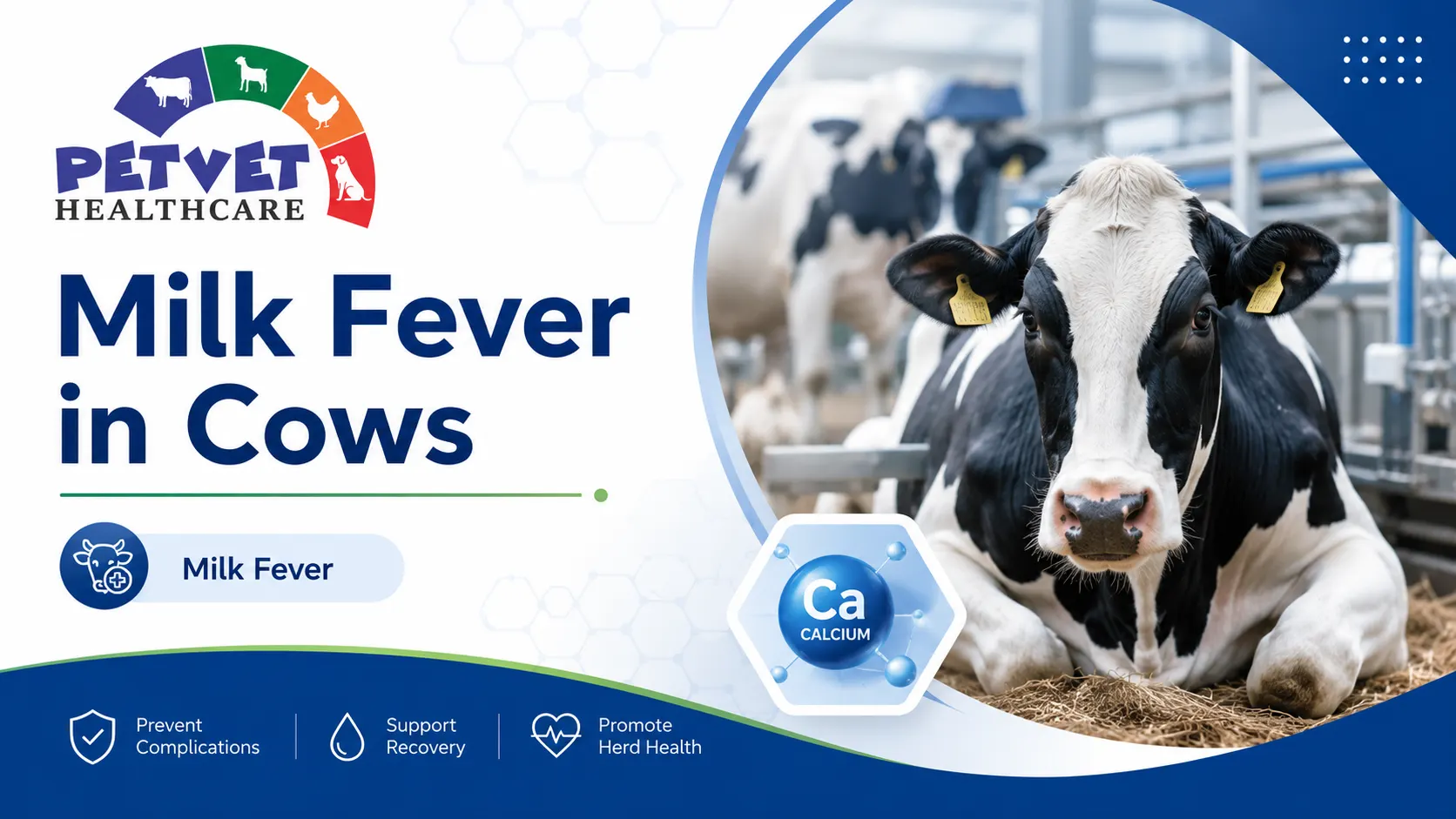
6. Milk Fever Statistics: India & Global Data
Data-backed context helps farmers and veterinarians understand the true scale of the milk fever problem:
- Clinical milk fever affects an estimated 3% to 8% of dairy cows globally in an average herd, though incidence in individual herds can range far higher depending on management practices.
- A Haryana-based field study recorded clinical milk fever incidence as high as 28% among high-yielding cows, compared to 19% in buffaloes, with the risk climbing sharply at the fourth and fifth lactations.
- Calcium deficiency disorders, including milk fever, are estimated to cost dairy farmers in Haryana alone around ₹1,000 crore (roughly USD 137 million) annually.
- In the United States, USDA health surveys have tracked a gradual decline in clinical milk fever incidence — from 5.2% in 2002, to 4.9% in 2007, down to 2.8% by 2014 — reflecting improved transition-cow management.
- Subclinical hypocalcemia (a milder, often undetected form) affects close to 50% of dairy cows in some herd studies, meaning the true burden of calcium deficiency is far larger than clinical case counts suggest.
- The average total cost of a single clinical milk fever case, including treatment, veterinary time, and lost production, has been estimated at roughly USD 334 per case, with subclinical cases adding further hidden losses across a herd.
- Cows affected by milk fever face a meaningfully higher risk of secondary conditions such as mastitis, retained placenta, and displaced abomasum, which compound the economic impact well beyond the initial illness.
These numbers make one point clear: milk fever is not a rare or minor issue — it is a recurring, high-cost challenge across Indian and global dairy operations, and proactive calcium management is the most effective countermeasure.
7. Calcium Bolus Comparison: PetVet Healthcare vs. Other Market Brands
Not all calcium boluses offer the same reliability. Here’s how PetVet Healthcare’s calcium boluses compare with typical, non-certified alternatives commonly sold in the Indian market:
| Parameter | PetVet Healthcare Calcium Bolus | Typical Uncertified Market Bolus |
|---|---|---|
| Manufacturing Standard | WHO-GMP & cGMP certified facility | Often no GMP certification |
| Quality Control | Batch-wise raw material and finished product testing | Inconsistent or no batch testing |
| Calcium Bioavailability | Formulated for fast + sustained release | Variable absorption, unverified release profile |
| Veterinary Guidance | Backed by in-house formulation and QC experts | Limited to no technical support |
| Product Range | Calcium, appetite, and antibiotic boluses under one brand | Usually single-product, limited range |
| Sourcing | Pan-India supply with distributor and PCD network | Often regional or unreliable supply chains |
| Regulatory Documentation | Full compliance documentation available | Often unavailable or incomplete |
| Pricing Transparency | Consistent, wholesale-friendly pricing | Prices vary widely, less predictable |
This comparison highlights why veterinarians and distributors increasingly prefer certified manufacturers like PetVet Healthcare over uncertified, low-accountability alternatives — especially for a time-sensitive condition like milk fever, where product reliability directly affects animal survival.
8. Frequently Asked Questions
Q1. What is milk fever in cows? Milk fever is a metabolic condition caused by a sudden drop in blood calcium levels around calving, leading to muscle weakness, recumbency, and, if untreated, collapse. It does not involve an actual fever.
Q2. What are the main causes of milk fever in cows? The main causes include the sudden calcium demand from colostrum production, slow calcium mobilization in older cows, high-calcium pre-calving diets, and breed predisposition, especially in Jersey cattle.
Q3. What are the early symptoms of milk fever? Early symptoms include restlessness, muscle tremors, reduced appetite, and mild incoordination, progressing to an inability to stand if untreated.
Q4. How is milk fever treated? Milk fever is treated with an intravenous calcium borogluconate infusion under veterinary supervision, followed by oral calcium boluses to sustain blood calcium levels over the following 24 hours.
Q5. How can milk fever be prevented in dairy cows? Prevention includes oral calcium boluses at calving, anionic diets (DCAD) during the dry period, avoiding excess pre-calving dietary calcium, and closely monitoring high-risk cows such as those in third lactation or later.
Q6. Which cows are most at risk of milk fever? Older, high-yielding dairy cows, particularly from the third lactation onward, and Jersey breed cattle are at the highest risk.
Q7. Where can I buy reliable calcium boluses for milk fever? PetVet Healthcare manufactures WHO-GMP certified calcium boluses and calcium injections designed for milk fever treatment and prevention. Contact PetVet Healthcare at +91 86074 15111 or view the full product range at petvethealthcare.in.
9. About PetVet Healthcare
PetVet Healthcare is a WHO-GMP and cGMP certified veterinary medicine manufacturer based in Ambala Cantt, Haryana, India. The company manufactures and supplies calcium boluses, injections, and feed supplements formulated specifically for conditions like milk fever, alongside PCD pharma franchise and third-party manufacturing services for veterinary businesses across India. For farmers, veterinarians, and distributors looking for dependable milk fever management solutions, PetVet Healthcare’s calcium bolus and injection range offers certified quality backed by in-house formulation expertise.
Explore our calcium bolus and injection range: petvethealthcare.in/product-list Talk to our team: +91 86074 15111 | petvetindia@gmail.com


