Lumpy skin disease (LSD) is a viral infection in cattle and buffalo caused by the Capripoxvirus, spread mainly through mosquitoes, ticks, and flies. It causes fever, skin nodules, and a sharp drop in milk yield. India’s dedicated vaccine, Lumpi-ProVacInd, developed by ICAR, provides about one year of protection with a single dose. There is no direct antiviral cure — treatment focuses on supportive care, isolation, and preventing secondary infections — which is why vaccination and early isolation remain the most effective protection for a herd.
Introduction
Since first appearing in India in 2019, lumpy skin disease has gone from an unfamiliar name to one of the most feared words on a dairy farm. A 2022-2023 outbreak alone resulted in over 165,000 cattle deaths across the country, according to data reported by Down To Earth, with Rajasthan and Gujarat among the hardest-hit states.
This guide covers what LSD actually is, how to recognize it early, what vaccine protection is available in India, and what to realistically expect during treatment and recovery.
What is Lumpy Skin Disease?
Lumpy skin disease is a contagious viral infection affecting cattle and buffalo, caused by the Lumpy Skin Disease Virus (LSDV), a member of the Capripoxvirus genus — the same viral family as goat pox and sheep pox. It is not zoonotic, meaning it does not spread to humans, though it can devastate a herd’s health and a farmer’s income if not managed quickly.
Key facts:
- Affects cattle and buffalo
- Spreads primarily through biting insects, not casual contact
- Causes visible skin nodules, fever, and reduced milk production
- First recorded in India in 2019; became endemic in the years following
Causes and How Lumpy Skin Disease Spreads
LSDV is primarily a vector-borne disease — insects are the main driver of transmission, not animal-to-animal contact alone.
Main modes of transmission:
- Mosquitoes, ticks, and biting flies (the primary route)
- Direct contact with infected animals through skin lesions
- Contaminated shared equipment, feeding troughs, or water sources
- Introduction of new, unscreened animals into a herd
Warm, humid conditions — and periods of high insect activity — significantly increase transmission risk, which is why outbreaks in India have historically clustered during and after the monsoon season.
Symptoms of Lumpy Skin Disease in Cattle
Early/common symptoms:
- High fever (40°C or above)
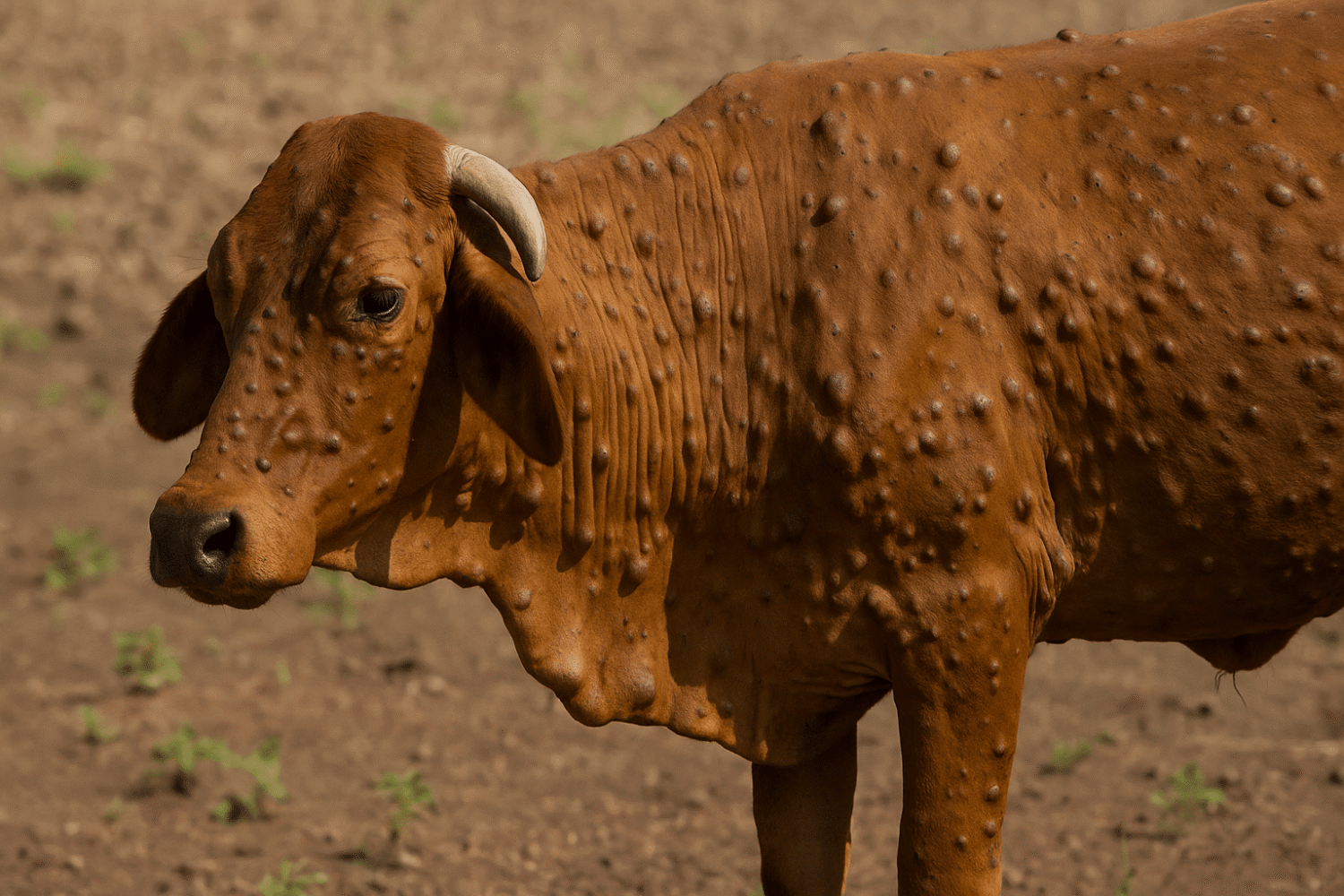
- Firm, round skin nodules (2-5 cm) across the body, especially on the head, neck, udder, and limbs
- Swollen lymph nodes
- Reduced appetite
- Noticeable drop in milk yield
Advanced symptoms:
- Nasal and eye discharge
- Lameness, due to swelling in the legs
- Significant weight loss
- Secondary bacterial infections at nodule sites (myiasis/maggot infestation in severe, untreated cases)
Recognizing the fever and early nodules within the first 1-2 days gives you the best window to isolate the animal and limit spread to the rest of the herd.
Lumpy Skin Disease Vaccine in India: Lumpi-ProVacInd
For years, India relied on a heterologous goat pox vaccine to protect cattle against LSD, since no LSD-specific vaccine existed domestically. Field evaluations in 2022 found this approach had inconsistent efficacy against the disease.
In response, ICAR-National Research Centre on Equines (Hisar), in collaboration with ICAR-Indian Veterinary Research Institute (Izatnagar), developed Lumpi-ProVacInd — India’s first indigenous, homologous, live-attenuated LSD vaccine, built using a local virus strain isolated from Ranchi. It was released by the Union Ministries of Agriculture and Animal Husbandry on 10 August 2022 and has since been commercialized to manufacturers including Biovet, Indian Immunologicals, Hester Biosciences, and the Institute of Veterinary Biological Products, Pune.
| Factor | Lumpi-ProVacInd | Goat Pox Vaccine (previously used) |
|---|---|---|
| Type | Homologous (LSD virus-based) | Heterologous (goat pox virus-based) |
| Developed by | ICAR-NRCE & ICAR-IVRI, India | Not LSD-specific |
| Duration of protection | Approximately 1 year per dose | Variable, less consistent |
| Side effects | No fever or milk-yield drop observed in trials | Some reactions reported in field use |
| Availability | Commercialized to multiple Indian manufacturers | Previously used as stopgap measure |
A large field safety trial covering nearly 27,000 cattle and buffaloes across six Indian states found Lumpi-ProVacInd safe across all age groups, including calves, pregnant and lactating animals, and bulls, with no fever observed in vaccinated animals during the study.
Lumpy Skin Disease Treatment
There is currently no direct antiviral cure for LSD. Treatment is entirely supportive, focused on managing symptoms and preventing complications while the animal’s immune system fights the infection.
Standard treatment approach:
- Isolate the infected animal immediately to prevent further spread within the herd.
- Manage fever and pain with veterinarian-prescribed anti-inflammatory medication.
- Prevent secondary bacterial infections at nodule sites using antibiotics, as advised by a vet.
- Support immunity and recovery with vitamin and mineral supplementation, particularly during the appetite-loss phase.
- Treat skin lesions directly with antiseptic solutions to prevent maggot infestation, especially in warm, humid conditions.
With proper supportive care, most animals recover within 2-3 weeks, though milk yield may take longer to return to pre-infection levels.
Home Care for Infected Cattle
While veterinary treatment should always be the primary response, these supportive steps help recovery at the farm level:
- Keep infected animals in a clean, dry, well-ventilated shelter, separated from the rest of the herd
- Clean and apply antiseptic to skin nodules regularly to prevent fly-strike and secondary infection
- Ensure constant access to fresh water and easily digestible, nutritious feed
- Minimize handling stress and avoid overcrowding during the isolation period
Prevention: What Actually Reduces Risk
- Vaccinate proactively, not just during an active outbreak — protection needs time to develop.
- Control insect populations around the farm using repellents and eliminating stagnant water where mosquitoes breed.
- Screen and quarantine new animals before introducing them to the herd.
- Disinfect shared equipment regularly, including feeding troughs and milking equipment.
- Avoid mixing sick and healthy animals, even within the same shed.
Impact on Dairy Farming
Beyond the animal welfare concern, LSD carries a real financial cost for farmers:
- Milk production can drop by up to 50% in affected animals during active infection
- Fertility issues have been reported in recovering cattle
- Skin damage from nodules can reduce an animal’s resale/market value
- Treatment and veterinary costs add up quickly, especially in multi-animal outbreaks on a single farm
The 2022-2023 outbreak illustrated this at scale — the reported death toll of over 165,000 cattle represented a significant, quantifiable hit to dairy farmer incomes and India’s overall milk supply chain.
Common Mistakes That Make Outbreaks Worse
- Waiting to see if symptoms “get better on their own” before isolating the animal
- Skipping veterinary consultation and relying only on home remedies for a suspected case
- Continuing to share equipment between sick and healthy animals during an active outbreak
- Deferring vaccination until cases already appear nearby, rather than vaccinating proactively
- Poor farm hygiene, which increases both insect breeding and secondary infection risk
FAQs
Q1. What is lumpy disease in cattle?
Lumpy skin disease is a viral infection caused by the Capripoxvirus, leading to fever, skin nodules, and reduced milk production in cattle and buffalo. It spreads primarily through biting insects and is not transmissible to humans.
Q2. What is the vaccine for lumpy skin disease in India?
India’s dedicated vaccine is Lumpi-ProVacInd, developed by ICAR-NRCE Hisar and ICAR-IVRI Izatnagar. It’s a homologous, live-attenuated vaccine offering approximately one year of protection per dose, and was found safe across age groups including calves and pregnant animals in large-scale field trials.
Q3. Is there a cure for lumpy skin disease?
There is no direct antiviral cure. Treatment is supportive — managing fever and pain, preventing secondary bacterial infections with antibiotics, and boosting immunity with proper nutrition — while the animal’s own immune system clears the infection.
Q4. Can lumpy skin disease spread to humans?
No. Lumpy skin disease is not zoonotic and does not infect humans. It is a cattle- and buffalo-specific viral disease spread mainly by biting insects.
Q5. How long does recovery from lumpy skin disease take?
With proper supportive care and isolation, most cattle recover within 2-3 weeks. Milk yield may take somewhat longer to return fully to pre-infection levels.
Q6. How can lumpy skin disease be prevented?
Proactive vaccination, insect control around the farm, screening new animals before introducing them to the herd, and maintaining strict hygiene and equipment disinfection are the most effective preventive measures.
Sources
- Down To Earth — Lumpy Skin Disease: Indian Vaccine Timeline and Cattle Deaths (Jan 2022-May 2023)
- Press Information Bureau (PIB), Government of India — Lumpi-ProVac Commercial Production MoU
- The Tribune — ICAR Develops Vaccine for Lumpy Skin Disease
Related Reading
- Calcium Deficiency in Livestock: Symptoms, Causes & Treatment
- Deworming Schedule for Cattle, Goats & Sheep in India
- Bulk Veterinary Medicine Procurement for Dairy Farms
Need Reliable Veterinary Supplies to Support Recovery?
PetVet Healthcare manufactures WHO-GMP certified antiseptics, immunity-support supplements, and mineral formulations to help cattle recover from illness and maintain herd health. Explore our product range or contact us at +91 86074 15111 for supply and bulk procurement queries.
Disclaimer: This article is for general awareness only and is not a substitute for veterinary diagnosis or treatment. If you suspect lumpy skin disease in your herd, isolate the affected animal immediately and contact a veterinarian or your local animal husbandry department.